How to Create a Stunning, Low-Water Front Yard in Arcadia
A front yard in Arcadia has to do more than look attractive from the street. It has to hold up through hot summers, periodic water restrictions, intense sun, and the kind of clay-heavy or compacted soils that can make plants struggle if the plan is wrong from the start. It also has to fit the house. A low-water landscape that feels elegant in front of a Spanish revival home may look out of place at a mid-century ranch or a newer transitional property.
The strongest front yards in this part of Southern California are not built around deprivation. They are built around restraint, smart plant choices, and a clear sense of structure. When homeowners hear phrases like drought-tolerant landscaping for Southern California or xeriscaping for California homes, they sometimes picture gravel, cactus, and a yard that feels more harsh than welcoming. That is usually the result of poor design, not the result of water-wise design itself.
A beautiful low-water front yard can feel lush, layered, and high-end. The difference is in how the space is organized, how plant masses are repeated, how hardscape is balanced against planting, and how irrigation is tuned to real conditions rather than guesswork.
Start with Arcadia’s specific conditions
Arcadia is not one-size-fits-all. Some neighborhoods have broad front setbacks, mature specimen trees, and classic estate proportions. Others have modest lots where every square foot matters. The San Gabriel Valley climate brings long dry stretches, warm temperatures, and periods of intense heat that punish thirsty plant palettes. A design that worked in a coastal city often fails inland because the exposure is different, the overnight cooling is different, and the irrigation demand rises fast.
Before drawing a single planting bed, pay attention to four things: sun exposure, existing soil, drainage patterns, and the scale of the architecture. This is where many landscaping mistakes homeowners make in Arcadia begin. They fall in love with a Pinterest image, copy the plant list, and discover six months later that the west-facing side fries in afternoon heat while the low spot near the walkway stays damp longer than expected.
I have seen front yards where the homeowner spent heavily on mature shrubs, decorative rock, and new lighting, but the grading was never corrected. Water pooled near the entry, mulch washed into the path, and two expensive specimen plants declined by the end of the first summer. The project looked polished on install day and tired by the next season. A strong low-water yard has to work as a system, not just as a photo.
The most important design move is structure
If you want a front yard to look stunning with less water, structure matters more than flower count. Water-wise landscape design ideas succeed when there is a strong backbone. That backbone usually comes from hardscape lines, planting masses, repeating textures, and a few strategic focal points.
A good front yard should read clearly from the street and feel intentional as someone approaches the front door. The eye should land on the entry path, the house number, the front porch or entry court, and perhaps one or two anchor plantings. Too many competing elements make a dry-climate landscape look messy very quickly.
In Arcadia, some of the most successful modern landscape design inspiration for Arcadia homes uses broad paths, neatly defined decomposed granite or gravel zones, sculptural planting, and clean evergreen forms. On more traditional homes, the same principle still applies, but the materials shift. The planting may soften, the path material may become brick or natural stone, and the arrangement may feel more symmetrical.
That is one reason low-maintenance landscaping ideas often overlap with high-end design. Fewer plant varieties, repeated with discipline, create a calmer and more expensive-looking result. They also make irrigation zoning and seasonal upkeep much easier.
Lawn is not the enemy, but it should earn its place
Many Arcadia homeowners assume a low-water front yard means removing every inch of turf. Sometimes that is the right move. Sometimes it is not. A small, well-placed lawn can still make sense if it serves a visual purpose, cools the area, or softens a formal façade. The issue is not turf in principle. The issue is oversized turf that exists only because the original builder installed it decades ago.
Large front lawns are often the biggest source of unnecessary outdoor water consumption. They also tend to create dead space. If the lawn is never used, never crossed, and only exists between the sidewalk and house, it may be the least efficient square footage on the property.
When homeowners ask how to reduce outdoor water consumption without making the yard feel stark, I often suggest shrinking the lawn rather than eliminating it by default. A narrow ribbon of grass near the walkway or a small geometric panel framed by drought-tolerant plants can preserve softness while cutting irrigation demand substantially. In many cases, replacing even half of a traditional front lawn with planting beds, gravel courts, or permeable hardscape changes the maintenance burden immediately.
Choose plants that thrive in Arcadia, not just survive
This is where local experience matters. Native California plants that thrive in Arcadia can perform beautifully, but not every native belongs in every front yard. Some get too loose, too seasonal, or too wild in appearance for a formal streetscape. Some Southern California-adapted plants, even if not strictly native, offer excellent drought performance with a tidier habit.
The goal is not to create a botanic collection. The goal is to build a layered composition that handles heat, looks good for most of the year, and does not demand constant shearing.
landscaping guideA reliable low-water front yard often includes evergreen structure, seasonal bloom, ground-level texture, and one or two accent plants with architectural shape. Think in masses rather than specimens scattered like ornaments.
Here are five plant categories worth considering for Arcadia front yards:
- Structural shrubs such as westringia, dwarf myrtle, or compact pittosporum alternatives, used where evergreen form matters.
- Native or climate-adapted flowering perennials such as salvia, penstemon, gaura, or yarrow, chosen for long bloom and pollinator value.
- Architectural accents such as aloe, agave, hesperaloe, or grass-like lomandra, placed sparingly where they can read as focal points.
- Groundcovers and low spreaders such as dymondia, trailing lantana, or low-growing ceanothus varieties, depending on exposure and maintenance goals.
- Small trees or multi-trunk accents such as olive, strawberry tree, or palo verde in the right setting, used to add canopy and scale.
There is an important trade-off here. The most drought-tough plants are not always the cleanest-looking plants in every season. A wise planting plan blends resilience with year-round appearance. For example, some native sages are outstanding performers but need periodic cutback and can look rangy if they are not given enough room. That does not make them bad choices. It means they need the right location and realistic expectations.
Soil preparation is where water savings really begin
Homeowners often spend hours choosing pavers and plants and almost no time thinking about soil. That is backwards. Poor soil preparation is one of the fastest ways to waste water. Compacted ground sheds irrigation instead of absorbing it. Plants then struggle, owners water more, and the root systems remain shallow.
In Arcadia, front yards often benefit from soil loosening, targeted amendments where appropriate, and a grading plan that directs water into planting zones rather than into the street. Not every drought-tolerant plant wants rich amended soil, so this is not a matter of dumping compost everywhere. It is about matching the soil strategy to the plant palette.
For many low-water designs, the best approach is to improve infiltration and rooting depth while avoiding over-amendment that creates a bathtub effect. If a planting hole becomes a pocket of soft amended soil surrounded by dense native soil, water can sit where roots do not want it. This is especially risky with succulents and some Mediterranean-climate shrubs.
When a front yard installation is done properly, you should see healthier plants with less frequent irrigation after establishment. That is the point. Water-wise design is not just about what you plant. It is about giving those plants the conditions to use water efficiently.
Irrigation should be invisible, targeted, and flexible
If the planting plan is the heart of the yard, irrigation is the circulatory system. A beautiful design can still fail if every plant is placed on one spray zone with the same run time. That happens more often than it should.
Drip irrigation is usually the best fit for low-water front yards, though not the only tool. Bubblers may be appropriate for trees. Certain groundcovers may need different emitter spacing than larger shrubs. Exposure matters too. A south-facing bed near reflective pavement can dry out much faster than a shaded side bed.
This is where homeowners benefit from understanding what to expect during a landscaping project in Arcadia. Good contractors do not simply install plants and connect a generic timer. They create hydrozones, adjust emitter counts to plant size, test coverage, and return after establishment to recalibrate. The first year and the third year should not have identical watering schedules.
Smart controllers can help, but they are only as useful as the design and programming behind them. A smart controller cannot fix bad zoning, clogged emitters, or plants grouped with incompatible water needs.
Mulch matters more than people think
Choosing the right mulch for dry climates has an outsized effect on both appearance and water retention. Mulch lowers evaporation, moderates soil temperature, reduces weed pressure, and gives the planting beds a finished look. It is one of the least glamorous parts of a project and one of the most valuable.
Organic mulch, such as shredded bark or wood chips, works well in many planting beds and improves the soil over time as it breaks down. Mineral mulch, such as gravel, can be excellent around succulents and in more contemporary compositions, but it reflects heat and can make a yard feel hotter if overused. It also does nothing to soften acoustics or enrich the soil.
A common mistake is applying decorative rock over landscape fabric across the entire front yard. It may look neat for a month or two. Then dust collects, weeds germinate in the debris layer on top, and the yard becomes harder to maintain than it looked on day one. Fabric has selective uses, but as a blanket solution beneath all decorative stone, it often creates future headaches.
In Arcadia, where summer heat can be intense, I usually see the best results from a balanced approach. Use organic mulch in planted zones where roots need protection and the design benefits from softness. Use gravel or stone strategically where drainage, style, or foot traffic calls for it.
Hardscape is what makes the yard feel finished
Planting gets most of the attention, but hardscape often determines whether a front yard feels average or exceptional. A widened walkway, a generous porch landing, a low seat wall, or a crisp edging detail can make the entire property feel more valuable.
This connects directly to how to increase property value with landscaping in Arcadia. Buyers and appraisers respond to coherence. They notice when the front approach feels inviting and complete. They also notice when the landscape appears expensive to maintain or likely to fail. A refined low-water front yard sends the opposite message. It suggests the home has been thoughtfully improved, not just cosmetically updated.
On larger properties, front yard hardscape may include a motor court edge, decorative gate approach, lighting, and layered planting islands. On smaller lots, the value often comes from simpler upgrades done well, such as replacing a narrow cracked path with wider pavers, integrating path lighting, and framing the entry with planting that remains controlled rather than overgrown.
Some of the best before and after landscape transformation ideas are not dramatic because they add more elements. They are dramatic because they remove clutter, improve flow, and make the home itself look better.
Avoid the common visual mistakes
A low-water front yard can fail aesthetically even if every plant is technically drought-tolerant. The most common problems are rarely botanical. They are compositional.
Too many plant species create visual noise. Too many boulders make the yard look staged. Too much gravel makes it feel barren. Too many spiky succulents near the front walk make it less welcoming. A landscape needs contrast, but it also needs calm.
One Arcadia project I remember had nearly twenty plant species in a moderate-sized front yard. Every section had a different texture and bloom color. The owner thought variety would make the yard feel rich. Instead, the house disappeared behind a busy foreground. We simplified it to seven main plant types, reworked the path edge, and introduced one olive tree as an anchor. The yard looked larger, cleaner, and significantly more upscale, while using less water than before.
That is the tension worth remembering. More is not always more. Editing is often the move that creates beauty.
The front yard should relate to the rest of the property
Even if your current priority is curb appeal, the front yard should not feel disconnected from the backyard or side yards. Homeowners planning a complete backyard renovation in Arcadia often begin with the front because it is the first impression, then discover the design language needs to carry through the property.
If the front yard is sleek and contemporary but the backyard remains heavily traditional, the transition can feel awkward. The materials, planting tone, and lighting style do not need to match perfectly, but they should feel related. This becomes especially important for larger homes where the landscape is experienced in sequence, from street to entry to rear outdoor living areas.
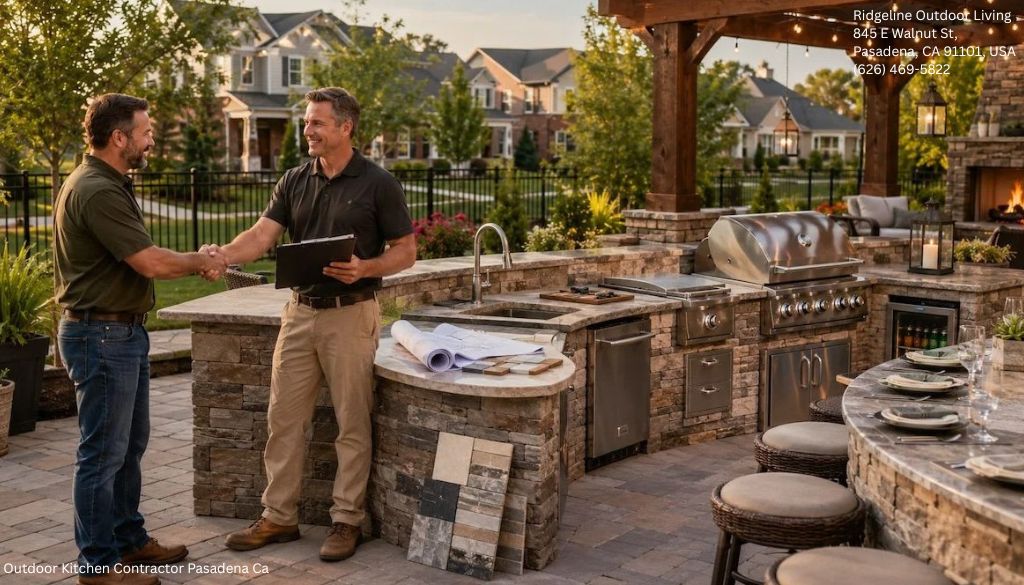
That is also why outdoor living ideas for Southern California properties belong in the conversation, even for Best landscaping contractors in Arcadia California a front yard article. Arcadia homes increasingly treat the entire landscape as usable lifestyle space, not just decorative perimeter. A shaded front sitting area, a widened porch with integrated planters, or a small courtyard tucked behind layered planting can make the front yard feel active without wasting water.
Luxury outdoor living spaces in Arcadia are not always defined by size. Often they are defined by comfort, privacy, and how effortlessly the space supports daily life.
How to work with a contractor without losing the design
Choosing a landscaping contractor in Arcadia should be about more than price per square foot. A low-water front yard is a permanent investment, and the contractor’s judgment matters. The bid should reflect irrigation layout, soil preparation, drainage solutions, finish materials, and plant spacing, not just installation labor.
Ask how the contractor handles plant establishment, irrigation adjustments, and substitutions if a nursery item is unavailable. Ask whether they have experience with drought-tolerant landscaping for Southern California beyond succulent-only designs. Ask how they protect hardscape grades and avoid water runoff issues at sidewalks and driveways.
A contractor who understands the local climate will usually talk early about the boring but critical parts of the job: sleeves under pathways, valve placement, root barriers where needed, decomposed granite stabilization if used, and how mulch will be kept out of walkways. That practical mindset is usually a good sign.
Before signing, it helps to clarify a few project expectations:
- Confirm the irrigation plan by zone, not just the plant palette.
- Review mature plant sizes so spacing is based on growth, not install-day fullness.
- Ask what the front yard will need in the first 90 days, including watering and cleanup.
- Make sure drainage and grading corrections are included if the site needs them.
- Decide which materials and plants are fixed, and which can be substituted if necessary.
This is the kind of groundwork that prevents disappointment later. It also sets the stage if you are considering a complete backyard makeover inspiration project down the line and want continuity across the property.
What the first year really looks like
Even the best low-water front yard is not fully low-maintenance on day one. That is one of the more honest answers to what to expect during a landscaping project in Arcadia and in the months after. Plants need establishment time. Irrigation needs monitoring. Mulch settles. A few things may need to be replaced if a heat wave hits early or if a plant was not happy in its location.
The first year is about training the landscape. Roots go down, canopies fill in, and irrigation is gradually reduced as plants stabilize. During this period, the yard can look a little spare compared with the vision drawings. That is normal. Overplanting to get instant fullness is one of the costliest mistakes homeowners make, because crowded plants quickly outgrow each other and increase both maintenance and water demand.
Patience pays off. By the second or third growing season, a well-designed yard starts to look settled. The mulch recedes behind fuller planting, the shrubs knit together, and the hardscape lines become more elegant because they are framed rather than exposed.
A stunning yard is one you can actually live with
A front yard earns the word stunning when it still looks composed in August, when the irrigation bill is reasonable, and when it does not require weekly rescue work to stay presentable. Beauty in Arcadia has to survive climate reality.
That is why the best low-water landscapes are disciplined rather than flashy. They use native California plants that thrive in Arcadia where those plants genuinely fit. They borrow from xeriscaping for California homes without turning the yard into a desert cliché. They use water-wise landscape design ideas to create comfort, rhythm, and value. And they understand that the smartest design decisions often happen below eye level, in soil prep, grading, irrigation, and mulch.
If you approach the front yard as a complete composition instead of a lawn replacement exercise, the result can be striking. Cleaner lines. Lower water use. Better curb appeal. Less maintenance. A stronger relationship between house and site.
That is not just good landscaping. In Arcadia, it is the version that lasts.